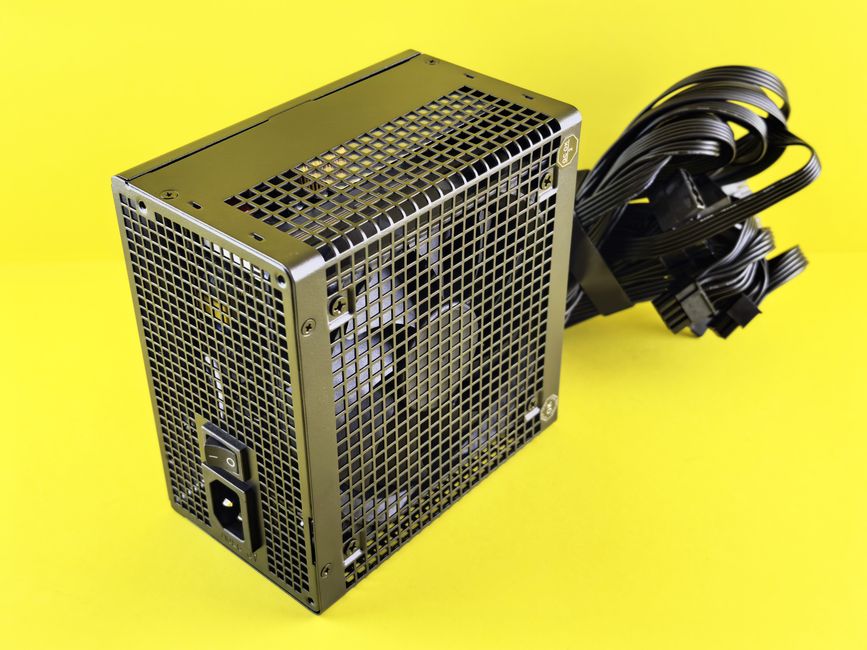
Introduction
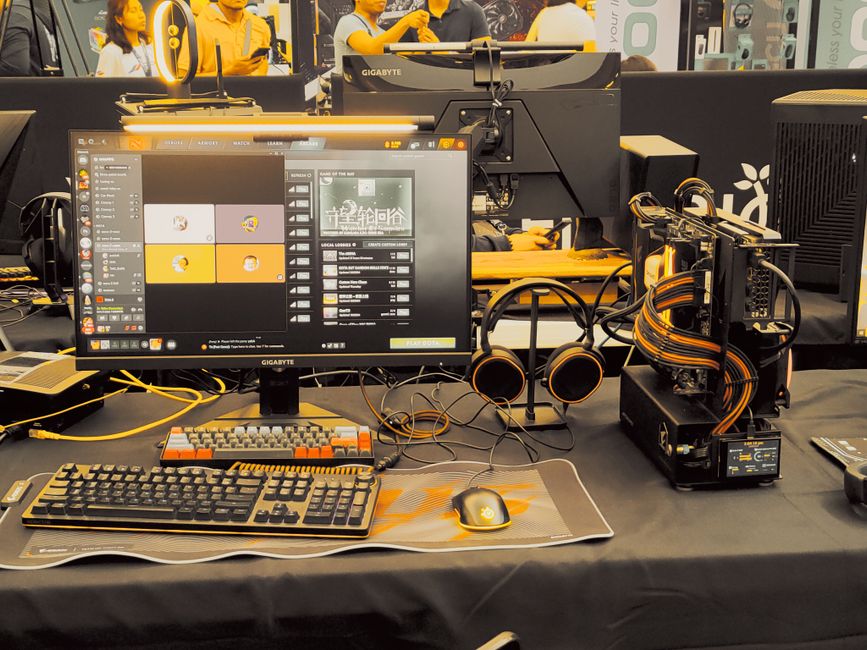
Building a budget gaming PC in 2026 remains one of the smartest investments for gamers targeting **1080p resolution** gameplay. Custom-built systems deliver better value per dollar compared to pre-built alternatives, giving you complete control over component selection and future upgrade paths. By carefully selecting each part, you can achieve smooth frame rates in modern titles without breaking the bank.
The advantages of building your own rig extend beyond cost savings. You’ll gain deeper understanding of your system’s capabilities and learn troubleshooting skills that serve you for years. Pre-built machines often cut corners on power supplies, cooling, or RAM speed—components that directly impact longevity and performance.
This guide focuses on **key components** that matter most for 1080p gaming: processor, graphics card, RAM, motherboard, storage, and cooling. We’ll help you navigate the 2026 market to find parts that balance performance with affordability.
Quick pick: Compare top-rated Pc options.
Choosing the Right Processor
The processor serves as your gaming PC’s brain, handling game logic, physics calculations, and background tasks. For 1080p gaming in 2026, you don’t need the latest flagship chip—mid-range CPUs from current and previous generations offer exc nt value. Most modern games remain GPU-bound at 1080p, meaning your graphics card works harder than your processor.
**AMD Ryzen 5 7600** and **Intel Core i5-13400F** represent sweet spots for budget builders. Both deliver six to ten cores with strong single-thread performance, essential for gaming. The Ryzen option typically costs $180-220, while Intel’s offering sits around $200-240. Either chip handles 1080p gaming with headroom for streaming or content creation.
When selecting your CPU, verify socket compatibility with your chosen motherboard. AMD’s AM5 platform and Intel’s LGA 1700 socket require specific board types. Check motherboard specifications for BIOS updates needed to support your exact processor model, especially with newer chips on older boards.
Selecting the Perfect GPU
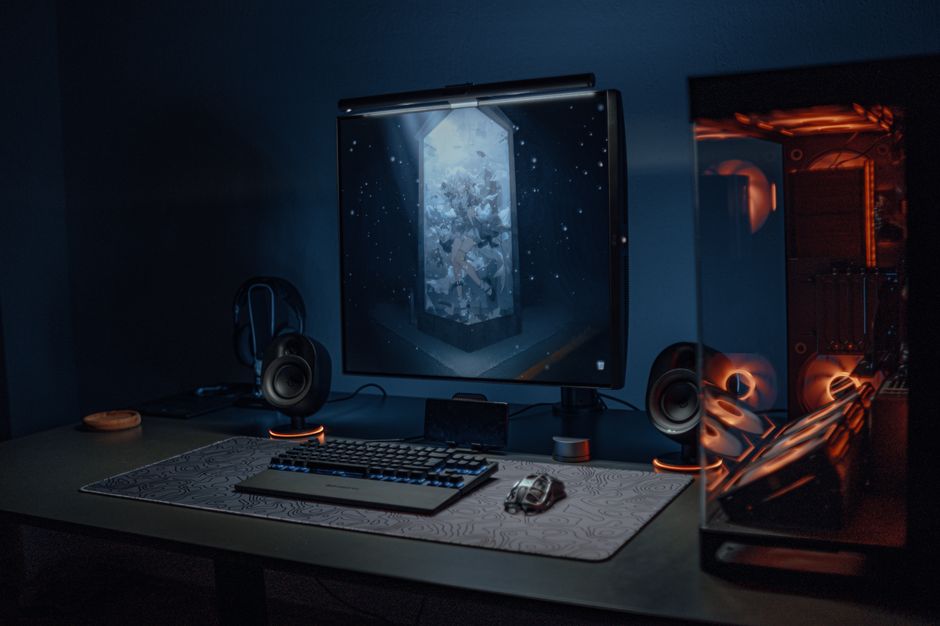
Your graphics card determines gaming performance more than any other component at 1080p resolution. Budget builders in 2026 benefit from exc nt options in the $250-350 range that handle modern AAA titles at high settings. This component deserves the largest portion of your budget allocation.
**NVIDIA GeForce RTX 4060** and **AMD Radeon RX 7600** both deliver 60+ fps in demanding games at 1080p with high or ultra settings. The RTX 4060 excels in ray-traced titles and offers DLSS upscaling technology, while the RX 7600 provides raw rasterization performance at a slightly lower price point. Both cards include 8GB VRAM, sufficient for 1080p gaming through 2027-2028.
Balancing GPU performance with your budget requires strategic thinking. If you’re stretching finances, allocate more toward the graphics card and select a slightly less expensive processor. The performance difference between mid-range and high-end CPUs barely registers at 1080p, while GPU upgrades deliver immediately noticeable improvements.
Picking the Right RAM
RAM capacity and speed directly impact gaming performance, particularly in modern titles that stream assets dynamically. For 1080p gaming in 2026, **16GB serves as the minimum viable amount**, with 32GB providing future-proofing for upcoming releases. Memory speed matters too—faster RAM reduces stuttering and improves frame time consistency.
DDR5 memory has become the standard for new builds, with speeds starting at 5200MHz and extending to 6000MHz+ for enthusiast kits. Budget builders should target **DDR5-5600 or DDR5-6000** kits in 2x8GB or 2x16GB configurations. These offer the best price-to-performance ratio, with dual-channel configuration delivering measurably better results than single-stick setups.
Compatibility checking prevents costly mistakes. Verify your motherboard supports your chosen RAM speed through its QVL (Qualified Vendor List). Most boards will run RAM at JEDEC speeds by default, requiring XMP or EXPO profile activation in BIOS to reach advertised speeds. Match your RAM generation (DDR4 vs DDR5) to your motherboard’s socket type.
Choosing a Reliable Motherboard
The motherboard connects all components and determines upgrade potential for years to come. Budget gaming boards in 2026 cost $120-180 and include essential features like PCIe 4.0 support, sufficient USB ports, and stable power delivery. Premium features like WiFi 6E or extensive RGB headers remain optional for most builders.
**B650 chipset boards** for AMD and **B760 chipset boards** for Intel provide the best value. These mid-range options support overclocking (on AMD; Intel requires K-series CPUs and Z-series boards), offer multiple M.2 slots for fast storage, and include enough fan headers for adequate cooling. Avoid bottom-tier A-series chipsets that limit upgrade paths.
Ensure your selected motherboard physically fits your case (ATX, Micro-ATX, or Mini-ITX) and includes sufficient connectivity for your needs. Check for at least one M.2 slot with PCIe 4.0 support, four RAM slots for future upgrades, and a front-panel USB-C header if your case includes one. Quality VRM (voltage regulator module) cooling prevents throttling under sustained loads.
Storing Your Games: HDD vs SSD
Storage technology has evolved dramatically, making **NVMe SSDs** the default choice for boot drives and game libraries. Traditional hard drives still serve as bulk storage for media files, but their slow speeds create frustrating load times in modern games. Budget builds should prioritize SSD capacity over HDD inclusion.
A **500GB NVMe SSD** represents the minimum for a gaming PC, providing space for Windows and 3-5 large titles. Most budget builders prefer **1TB NVMe drives** ($60-90) that accommodate operating system, productivity software, and a healthy game rotation. PCIe 3.0 drives deliver sufficient performance for 1080p gaming, though PCIe 4.0 options cost only $5-10 more.
Maximizing storage performance within budget constraints means selecting drives with DRAM cache and high TBW (terabytes written) ratings. The **Kingston NV2**, **Crucial P3**, and **TeamGroup MP33** offer reliable performance for budget builders. Install frequently played games on your SSD and less demanding or older titles on a secondary HDD if needed.
Cooling and Case Selection
Proper cooling prevents thermal throttling that tanks gaming performance and shortens component lifespan. Budget builders can achieve exc nt cooling results with **tower-style air coolers** costing $25-45 that outperform stock solutions. These coolers handle mid-range processors easily while maintaining quiet operation under load.
The **Thermalright Peerless Assassin 120** and **DeepCool AK400** exemplify budget cooling exc nce. Both feature dual-tower designs with included fans, delivering thermal performance rivaling $70-100 coolers. Ensure your chosen cooler’s height fits your case specifications—most budget cases accommodate coolers up to 165mm tall.
Case selection impacts both cooling efficiency and build experience. **Airflow-focused cases** with mesh front panels ($60-90) provide better thermal performance than closed-front designs. Look for cases with at least two included fans, dust filters, cable management space, and PSU shrouds that hide cables. The **Fractal Design Focus 2**, **Cooler Master TD300 Mesh**, and **Montech AIR 903** deliver exc nt value.
Assembling the PC and Initial Setup
Assembling your budget gaming PC requires patience and organization, but the process is straightforward with proper preparation. Start by installing the **power supply** in your case, routing major cables through grommets, and securing the PSU with included screws. Mount the motherboard I/O shield, then install motherboard standoffs matching your board’s form factor.
Install the processor into the motherboard socket while it’s outside the case—this prevents accidental damage. Align the CPU’s gold triangle with the socket marking, gently lower it into place, and secure the retention mechanism. Apply thermal paste (a rice-grain sized amount) before mounting your cooler. Install RAM into slots 2 and 4 (counting from the CPU), pressing firmly until clips engage.
Mount the motherboard into the case, secure it with screws, and connect front-panel headers, USB ports, and fan cables. Install your graphics card into the topmost PCIe x16 slot, remove corresponding case slot covers, and secure the card with screws. Connect the PSU’s PCIe power cables to your GPU. Install your NVMe drive by removing the M.2 heatsink, inserting the drive at a 30-degree angle, pressing down, and securing with the included screw. Connect all power cables, verify connections, and perform your first boot.
After successful POST (power-on self-test), install Windows from a USB drive. Download the latest drivers from your motherboard manufacturer’s website, graphics card manufacturer, and chipset provider. Enter BIOS to enable XMP/EXPO for RAM, verify boot order, and ensure proper fan curves for optimal cooling.
Optimizing Your Gaming Experience
Optimizing in-game settings balances visual quality with performance, ensuring smooth gameplay without sacrificing too much eye candy. Start by setting resolution to **1920×1080 native** and adjusting preset levels (Low, Medium, High, Ultra) until you achieve consistent 60+ fps. Most modern games include built-in benchmarks that reveal performance before you start playing.
Specific settings impact performance differently. **Shadow quality**, **ambient occlusion**, and **volumetric effects** tax GPUs heavily while providing subtle visual improvements. Reduce these to Medium while keeping **texture quality** at High or Ultra (which uses VRAM, not processing power). Anti-aliasing methods vary—**TAA** provides good quality at reasonable cost, while **MSAA** remains expensive on budget hardware.
Essential software enhances your gaming experience beyond driver installations. **MSI Afterburner** monitors temperatures and frame rates, **Discord** connects you with friends, and **OBS Studio** enables streaming or recording. Keep Windows updated, run periodic disk cleanup, and monitor temperatures during gaming sessions. Most components operate safely below 80°C under load.
| Component | Budget Option | Price Range | Performance Target |
|---|---|---|---|
| CPU | Ryzen 5 7600 / i5-13400F | $180-240 | 100+ fps esports, 60+ fps AAA |
| GPU | RTX 4060 / RX 7600 | $280-350 | 1080p High/Ultra 60+ fps |
| RAM | 16GB DDR5-6000 | $60-85 | Smooth frame times |
| Storage | 1TB NVMe SSD | $60-90 | Fast load times |
| Motherboard | B650 / B760 | $120-180 | Stable power delivery |
| Cooling | Tower air cooler | $25-45 | Sub-75°C under load |
| Case | Mesh airflow case | $60-90 | Good cable management |
| PSU | 650W 80+ Bronze | $60-80 | Reliable power |
Frequently Asked Questions
Q: What is the ideal budget for a 1080p gaming PC in 2026?
A: A capable 1080p gaming PC costs **$800-1000** including all components but excluding peripherals and operating system. This budget delivers 60+ fps in modern AAA titles at high settings. You can reduce costs to $650-700 by selecting previous-generation components or accepting medium settings in demanding games. Exceeding $1000 provides diminishing returns at 1080p, as you’ll hit resolution-based bottlenecks before fully utilizing premium components.
Q: Can I upgrade my current PC to handle 1080p gaming, or should I build a new one?
A: If your current system uses a motherboard from 2020 or newer with a compatible CPU socket, upgrading the graphics card alone often suffices for 1080p gaming. Systems with DDR4 RAM, PCIe 3.0 or 4.0 slots, and adequate power supplies (500W+) benefit from GPU upgrades. However, PCs older than five years typically require motherboard, CPU, and RAM replacement simultaneously, making a fresh build more cost-effective and providing better upgrade paths.
Q: How often should I expect to upgrade components in my budget gaming PC?
A: Graphics cards typically require upgrades every **3-4 years** to maintain high settings at 60+ fps in new releases. Processors last 5-6 years before showing age in CPU-intensive titles. RAM and storage upgrades happen as needed—adding more RAM when 16GB proves insufficient, or expanding storage when drives fill. Budget builders should plan for GPU replacement around 2029-2030 and full platform upgrade (CPU, motherboard, RAM) around 2030-2031 for continued 1080p gaming at high settings.
Top Product Recommendations
| Product Name | Rating | Key Feature | Est. Price | Action |
|---|---|---|---|---|
| Top-rated AMD Ryzen 5 processor | ★★★★★ | Editor-recommended AMD Ryzen 5 processor from this guide | $18–$42 | Check Lowest Price on Amazon |
| Best-value NVIDIA GeForce RTX 4060 graphics card | ★★★★☆ | Affordable NVIDIA GeForce RTX 4060 graphics card — strong everyday results | $12–$28 | Check Lowest Price on Amazon |
| Premium DDR5 RAM 16GB | ★★★★☆ | Higher-end DDR5 RAM 16GB for visible, lasting results | $45–$95 | Check Lowest Price on Amazon |
Affiliate Disclosure: This post contains affiliate links. We may earn a commission if you buy through our links, at no extra cost to you.
Leave a Reply