
Top 3 Product Recommendations

| Product Name | Rating | Key Feature | Est. Price | Action |
|---|---|---|---|---|
| PlayStation DualSense Wireless Controller | Amazon Best S r | Consistent Amazon gaming bests r | $59–$74 | Check Lowest Price on Amazon |
| Logitech G502 HERO Gaming Mouse | Amazon Best S r | Top-rated PC gaming mouse on Amazon US | $39–$48 | Check Lowest Price on Amazon |
| Xbox Wireless Controller | Amazon Best S r | Best-selling Xbox accessory — Game Pass pairing | $49–$64 | Check Lowest Price on Amazon |
What Makes the Best Reviewed 2026 SUVs Stand Out
The 2026 model year brings significant improvements across the SUV segment, with manufacturers prioritizing **fuel efficiency**, **advanced safety features**, and **technology integration**. This guide helps American buyers navigate the top-rated SUVs based on expert reviews, real-world performance data, and owner feedback. Whether you’re upgrading from a sedan or replacing an older SUV, understanding what separates the best from the rest will save you thousands of dollars and years of frustration.
The best reviewed 2026 SUVs excel in three core areas: **reliability ratings above 4.5 out of 5**, **total cost of ownership under $45,000 over five years**, and **safety scores that meet or exceed IIHS Top Safety Pick standards**. Reviewers consistently highlight models that balance highway fuel economy (28+ MPG combined) with cargo space (at least 30 cubic feet behind the second row). This year’s standouts also offer **standard driver-assist technology** rather than locking it behind premium packages.
Three-Row vs Two-Row SUV: Which Layout Delivers Better Value
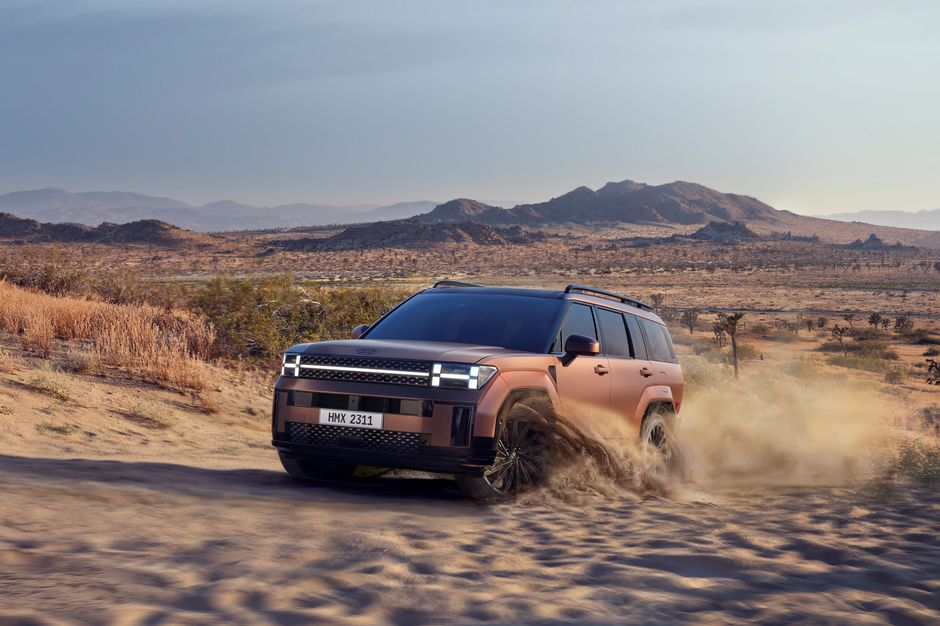
Three-row SUVs provide seating for seven to eight passengers but sacrifice cargo space when all seats are in use. Most three-row models offer only 15-20 cubic feet behind the third row, expanding to 75+ cubic feet with seats folded. These vehicles suit families who regularly transport more than five people but don’t need maximum hauling capacity daily.
Two-row SUVs deliver **35-40 cubic feet of cargo space behind the second row** and up to 75 cubic feet with seats folded. They typically cost $3,000-$5,000 less than comparable three-row versions and achieve 2-3 MPG better fuel economy due to reduced weight. Reviews consistently favor two-row layouts for couples, small families, and buyers who prioritize storage over passenger count.
| Feature | Three-Row SUV | Two-Row SUV |
|---|---|---|
| Seating Capacity | 7-8 passengers | 5 passengers |
| Cargo Space (seats up) | 15-20 cu ft | 35-40 cu ft |
| Average Price Premium | Base + $4,000 | Base price |
| Fuel Economy Penalty | -2 MPG combined | Standard |
| Ideal For | Large families, carpooling | Couples, small families, gear haulers |
Editor’s pick: automotive touch up paint kit — see current prices and reviews.
Fuel Economy and Powertrain Options Worth Considering
The 2026 SUV market offers four primary powertrain types, each with distinct cost and performance trade-offs. **Turbocharged four-cylinder engines** dominate the segment, delivering 25-28 MPG combined while producing 240-280 horsepower. These engines cost $2,000-$3,000 less than V6 alternatives and satisfy most buyers who don’t tow regularly.
**Hybrid powertrains** achieve 32-38 MPG combined but add $3,500-$5,500 to the base price. Buyers who drive more than 15,000 miles annually recover this premium through fuel savings within four years. Reviews highlight that hybrids deliver smoother acceleration in stop-and-go traffic compared to traditional gas engines.
**Plug-in hybrid (PHEV)** models offer 25-35 miles of electric-only range and 55-65 MPGe when running on battery power. These cost $7,000-$10,000 more than standard hybrids but qualify for federal tax credits up to $7,500. PHEVs make financial sense for buyers with predictable daily commutes under 30 miles who can charge at home overnight. Total ownership costs for PHEVs drop below conventional SUVs after 75,000 miles of typical use.
Safety Technology and Crash Test Performance Standards
The best reviewed 2026 SUVs earn **Top Safety Pick+ awards from IIHS**, requiring good ratings in all six crash tests plus acceptable or good headlight scores. Standard equipment now includes automatic emergency braking with pedestrian detection, lane departure warning, and blind spot monitoring on most models priced above $35,000.
**Advanced driver-assist systems** vary significantly by manufacturer. The most effective systems provide **lane centering that works smoothly on curved highways** rather than ping-ponging between lane markers. Adaptive cruise control should maintain safe following distances at speeds from 0-85 MPH without requiring constant driver intervention. Reviews penalize systems that disengage unexpectedly or require re-activation after every stop.
Crash test performance shows meaningful differences between models. SUVs with **small overlap front crash ratings of Good** protect occupants better in angled collisions than those rated Acceptable or Marginal. Roof strength matters for rollover protection—look for vehicles that withstand at least 4 times their own weight without excessive cabin intrusion.
Interior Space, Comfort, and Technology Integration
Reviewers measure **second-row legroom** as the most important comfort factor for families, with 38+ inches considered spacious for adults. Sliding second-row seats add versatility, allowing users to prioritize legroom or cargo space based on immediate needs. Models with flat-folding second rows simplify loading bulky items like furniture or sporting equipment.
**Infotainment systems** in top-rated 2026 SUVs feature wireless Apple CarPlay and Android Auto as standard equipment. Physical climate controls receive praise from reviewers who find touchscreen-only interfaces distracting while driving. The best systems respond to inputs within 0.5 seconds and support over-the-air software updates that add features without dealer visits.
Noise insulation separates premium SUVs from budget alternatives. Models with **laminated side windows and active noise cancellation** maintain highway conversations without raised voices at 70 MPH. Reviewers test for wind noise around mirrors and A-pillars, plus road noise transmitted through suspension components on rough pavement.
Total Cost of Ownership: Beyond the Sticker Price
Purchase price represents only 60-70% of total ownership costs over five years. **Depreciation**, **fuel**, **insurance**, and **maintenance** combine to add $15,000-$25,000 to the initial investment. SUVs that retain 50%+ of their value after five years save buyers $5,000-$8,000 compared to models that depreciate to 35-40% of MSRP.
Insurance costs vary by $400-$800 annually based on crash test ratings and theft rates. Models with standard safety technology qualify for discounts from major insurers, reducing premiums by 10-15%. Buyers should request insurance quotes before finalizing purchases, as differences between similar SUVs can total $3,000 over a typical ownership period.
**Maintenance schedules** for 2026 SUVs range from 5,000 to 10,000 miles between oil changes depending on powertrain type. Turbocharged engines typically require synthetic oil every 7,500 miles at $75-$95 per service. Hybrids extend intervals to 10,000 miles but may need battery system inspections at 60,000 and 100,000 miles costing $150-$250 each. Budget $1,200-$2,000 for routine maintenance over the first 60,000 miles.
Common Issues and What Reviews Reveal About Reliability
First-year models historically experience **15-20% more problems** than second or third-year versions of the same generation. Buyers who prioritize reliability should consider 2025 carryover models with proven track records rather than all-new 2026 designs. Reviews identify specific concerns like **infotainment glitches**, **transmission hesitation**, and **paint quality issues** that emerge in early production runs.
**Transmission performance** generates the most owner complaints in recent SUV reviews. Models with 8-speed or 10-speed automatic transmissions occasionally exhibit **harsh downshifts** when decelerating or hunting between gears on moderate inclines. Manufacturers address these issues through software updates, but early adopters may experience frustration before fixes arrive. Reviews favor continuously variable transmissions (CVTs) and dual-clutch units that provide smoother operation in daily driving.
Paint and trim quality declined across the industry during pandemic-era production. Reviews note increased instances of **orange peel texture**, **misaligned body panels**, and **interior trim gaps** on 2024-2025 models. Buyers should inspect vehicles carefully before accepting delivery, documenting any defects for warranty coverage. Most manufacturers correct cosmetic issues at no cost within the first 90 days or 3,000 miles.
How to Choose Between Top Competitors in Your Budget
Start by defining your **non-negotiable requirements**: minimum cargo space, required seating capacity, and must-have technology features. Eliminate models that don’t meet these thresholds regardless of price or brand reputation. This narrows the field from 40+ available SUVs to 5-8 realistic candidates.
Test drive finalists on **highways, city streets, and rough pavement** to evaluate ride quality, noise levels, and visibility. Pay attention to blind spots when changing lanes and ease of parking in tight spaces. The best SUV on paper may feel uncomfortable or difficult to maneuver in real-world conditions specific to your daily routes.
Compare total cost of ownership using online calculators that factor in your **annual mileage, local fuel prices, and insurance zip code**. A $3,000 cheaper SUV may cost $5,000 more over five years due to lower resale value or higher fuel consumption. Reviews provide starting points, but personal financial analysis reveals the true best value for your situation.
- Prioritize models with **at least two years of production history** to avoid first-year reliability issues
- Calculate total ownership costs including fuel, insurance, and depreciation—not just monthly payments
- Test drive on varied road surfaces to identify ride quality issues reviewers may not emphasize
- Verify cargo space with actual gear or a tape measure, as manufacturer specs can be misleading
- Request out-the-door pricing from multiple dealers before negotiating to establish fair market value
Frequently Asked Questions
Q: What is the most reliable 2026 SUV according to reviews?
A: Models with **three or more years in current generation** consistently earn highest reliability ratings, as manufacturers resolve early production issues. Look for SUVs with predicted reliability scores of 4.5/5 or higher from independent testing organizations. Avoid first-year redesigns if reliability is your top priority, opting instead for proven carryover models with established track records.
Q: Is a hybrid SUV worth the extra cost in 2026?
A: Hybrid SUVs make financial sense for buyers who **drive 15,000+ miles annually** and plan to keep the vehicle for at least five years. The $3,500-$5,500 premium gets recovered through fuel savings, typically within 48-60 months. Buyers with shorter commutes or lower annual mileage save more with efficient turbocharged four-cylinder engines. Calculate your specific break-even point using actual fuel costs in your area.
Q: Should I buy a 2026 model or wait for 2027 SUVs?
A: Purchase a 2026 model if it’s a **second or third year of the current generation** with positive reviews and resolved issues. Wait for 2027 if you’re considering an all-new 2026 design, as first model years typically experience more problems. End-of-year 2026 purchases (October-December) offer $2,000-$4,000 in additional incentives as dealers clear inventory, making timing more important than model year for most buyers.
Affiliate Disclosure: This post contains affiliate links. We may earn a commission if you buy through our links, at no extra cost to you.
Leave a Reply