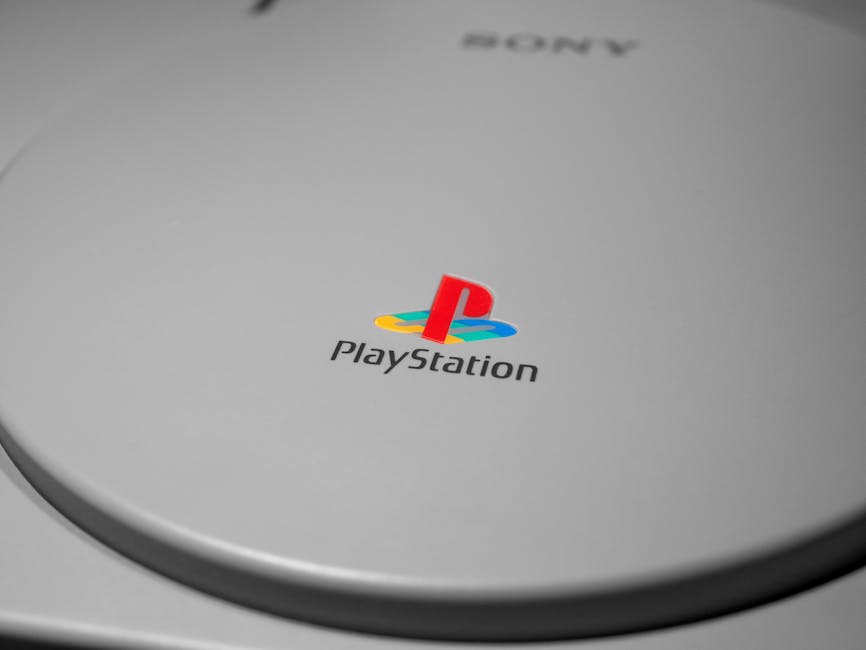
PlayStation 5 Overview: Sony’s Next-Gen Console Arrives
Sony Interactive Entertainment launched the PlayStation 5 in November 2020, marking the most significant generational leap in the company’s gaming history. As the successor to the PlayStation 4, the PS5 represents a complete redesign of what a home console can deliver, both in raw power and in the overall gaming experience. The system arrived in two versions at launch: a standard edition with a Blu-ray disc drive and a digital-only edition that lacks an optical drive entirely, giving players a choice based on whether they prefer physical or digital game libraries.
From the moment you unbox the PlayStation 5, the design makes a statement. The console features a tall, curved white shell with black accents that stands vertically or lies horizontally, a departure from the flat rectangular form factor of previous PlayStation generations. The DualSense controller included with every PS5 purchase introduced haptic feedback and adaptive triggers, fundamentally changing how games feel in your hands compared to older-generation controllers.
The PlayStation 5 supports 4K UHD Blu-ray discs and integrates 3D audio technology directly into its operating system. These core features make the console equally appealing to movie enthusiasts and dedicated gamers, maximizing the value of a single entertainment device in your living room. Sony positioned the PS5 not just as a gaming platform but as a comprehensive home entertainment hub capable of handling streaming apps, Blu-ray playback, and the most demanding titles the gaming industry produces.
PlayStation 5 Key Features and Technical Specifications
The PlayStation 5 is built around custom hardware designed in partnership with AMD, delivering performance that rivals many gaming PCs at a fraction of the cost. At the heart of the system sits an AMD Zen 2 CPU running at 3.5GHz with variable clock speeds, paired with a custom RDNA 2 GPU that produces 10.28 TFLOPS of compute power. This combination gives the PS5 enough muscle to run games at 4K resolution while maintaining the high frame rates that competitive and action-oriented titles demand.
The GPU inside the PlayStation 5 supports output resolutions up to 8K, though the practical reality of current gaming focuses primarily on 4K displays with 120Hz refresh rates for compatible televisions and monitors. This high refresh rate capability is particularly valuable for competitive multiplayer titles where every millisecond of input latency matters. The console also supports Variable Refresh Rate (VRR) through HDMI 2.1, which synchronizes the display’s refresh rate with the game’s frame output to reduce screen tearing and stuttering.
Perhaps the most revolutionary internal component is the custom 825GB NVMe SSD, which Sony marketed as “Superfast SSD” technology. Game load times that once required lengthy loading screens have been virtually eliminated for PS5-optimized titles. The SSD operates at read speeds far beyond what any previous console generation offered, enabling developers to design open-world games and instant transitions between gameplay areas that were simply impossible on prior hardware. An additional NVMe expansion slot lets users install compatible SSDs for additional storage without sacrificing the speed benefits of the internal drive.
PlayStation 5 Game Library: Exclusive Titles and Major Multiplatform Releases
The PlayStation 5 launch window brought an impressive lineup of exclusive titles that showcased exactly what the new hardware could accomplish. Demon’s Souls, a full remake from Bluepoint Games, demonstrated the system’s graphical capabilities with stunning lighting effects, intricate environmental detail, and the punishing difficulty that the Souls genre is known for. The Returnal trailer immediately caught attention with its roguelike shooter mechanics set in a haunting alien world, while Horizon Forbidden West continued Aloy’s journey across post-apocalyptic landscapes with vastly improved character models and environmental storytelling.
Beyond first-party exclusives, major third-party publishers committed significant resources to the PlayStation 5 ecosystem. Capcom released multiple titles leveraging the PS5’s power, with the Resident Evil series receiving dedicated enhancements that take advantage of the faster SSD and improved thermal performance. Square Enix brought Final Fantasy VII Remake to the platform, offering players an opportunity to experience one of the most beloved RPG stories in gaming history with dramatically improved visual fidelity and faster load times between areas.
The backward compatibility program deserves special mention, as the PlayStation 5 runs the vast majority of PlayStation 4 titles with enhanced performance. Many PS4 games on the PS5 load faster and can run at higher or more stable frame rates thanks to the improved hardware. Some titles even received dedicated PS5 upgrade patches that add features like higher resolution rendering, improved shadow quality, and ray tracing support that were not available when those games originally launched on the PS4.
PlayStation 5 Audio and Visual Technology
Sony integrated its proprietary 3D audio technology directly into the PlayStation 5’s system architecture, allowing games to process positional audio without requiring expensive external hardware. The Tempest Engine, a custom audio processing unit inside the PS5, simulates hundreds of sound sources in real time, placing audio cues in three-dimensional space around the player. Players report dramatically improved spatial awareness in competitive games where hearing an opponent’s footsteps before they appear on screen provides a genuine tactical advantage.
Ray tracing technology represents the visual cornerstone of the PlayStation 5’s next-gen capabilities. By simulating the physical behavior of light as it bounces off surfaces, ray tracing produces reflections, shadows, and global illumination that look far more natural than traditional rendering techniques. Games like Spider-Man: Miles Morales demonstrated this technology beautifully, with sunlight reflecting off wet city streets and car windows in ways that felt genuinely lifelike rather than artificially approximated.
The console’s visual output capabilities include full HDR support for compatible displays, enabling games to render a wider dynamic range of brightness and color than standard dynamic range content. Combined with 4K UHD output and support for 120Hz refresh rates on compatible displays, the PS5 delivers a visual experience that sits comfortably alongside high-end gaming PCs for a fraction of the price. The system automatically detects display capabilities during initial setup and configures optimal output settings without requiring manual calibration from most users.
PlayStation 5 Controllers and Accessories
The DualSense controller represents the most significant controller evolution since Sony introduced the DualShock line with the original PlayStation. Haptic feedback replaces the older rumble motor technology with a system capable of producing widely varying vibration textures that correspond precisely to in-game actions. Running across different terrain types, raindrops hitting your hands, and the tension of drawing a bow string all produce distinct tactile sensations that deepen immersion in ways vibration never could.
Adaptive triggers add variable resistance to the L2 and R2 buttons, allowing developers to simulate the feeling of pulling a trigger, stretching a rubber band, or pressing a button against spring tension. The integration of these features into compatible games creates a tangible difference in how actions feel compared to standard triggers. Not every game implements these features equally, but titles like Returnal and Ratchet & Clank: Rift Apart leveraged them to create some of the most memorable physical sensations gaming has produced.
PlayStation VR users will find the PlayStation 5 compatible with the original PSVR headset through an adapter, though Sony released the PlayStation VR2 as a dedicated next-generation virtual reality system for the PS5. The PS5 also supports the full range of PlayStation 4 controllers including the DualShock 4, though the system defaults to DualSense for new installations. Collector’s edition controllers like the Legend of Zelda-themed DualSense released for Tears of the Kingdom demonstrate Sony’s willingness to partner with major franchises for limited-edition hardware that appeals to dedicated fans of both brands.
PlayStation 5 Tips and Technical Optimization
One of the most appreciated advantages of the PlayStation 5 is its remarkably fast boot time and resume functionality. The system can enter a suspended state that keeps your current game loaded in memory, allowing you to return to gameplay in seconds rather than waiting through full system and game restarts. Enabling rest mode when stepping away from a session preserves your place in games without the thermal and power concerns that leaving a console running at full power would create.
Managing game save data and storage efficiently pays dividends on the PS5, particularly given the varying file sizes different titles produce. Installing PS5-optimized games on the internal SSD delivers the maximum speed benefit, while PS4 titles and less demanding games can be stored on external USB storage if needed. The Game Library feature organizes your entire collection across both digital and physical titles, and using the built-in search and filter tools makes finding a specific game far easier than navigating physical discs.
Backward compatibility with PlayStation 4 games extends to performance options that let many titles run better than they did on the original hardware. Checking each game’s compatibility settings reveals options labeled “Game Base” for standard performance and “Performance Mode” or “Resolution Mode” for options prioritizing frame rate or visual fidelity respectively. Taking time to experiment with these settings on individual games ensures you get the most enjoyable experience from your library regardless of whether a game defaults to the setting you personally prefer.
PlayStation 5 Troubleshooting and Problem Resolution
System updates and firmware issues occasionally prevent the PlayStation 5 from functioning properly, manifesting as error codes during startup or failure to recognize connected displays. Most firmware-related problems resolve by putting the console in safe mode, a specialized boot environment accessible by holding the power button until you hear a second beep. From safe mode, players can rebuild the database, restore the system software, or reset the console entirely depending on the severity of the issue.
Games occasionally run below expected visual quality or exhibit frame rate instability on the PlayStation 5, even in titles marketed as optimized for the system. Checking for game-specific patches in the game library before launching ensures you have the most current version, as developers frequently release post-launch updates that resolve performance issues discovered after release. For persistent issues, verifying the game’s display mode settings and ensuring the console is not overheating in a poorly ventilated entertainment center can resolve unexpected behavior.
Audio and video synchronization problems most commonly arise from incorrect HDMI settings on either the console or the connected television. Accessing the PS5’s sound and screen settings allows you to adjust HDMI device type, enable or disable features like 4K 120Hz support, and configure audio output formats that match your specific receiver or soundbar setup. For persistent sync issues where dialogue appears slightly ahead of or behind the audio track, the PS5 includes a manual audio/video sync adjustment tool that compensates for display processing delays that vary between television models.
PlayStation 5 Purchase Considerations and User Experience
Reviews from players who purchased the PlayStation 5 during its launch period and subsequent months reveal consistently high satisfaction with the system’s core performance and game library. The near-instant load times and buttery smooth frame rates in optimized titles frequently surprise players who owned the PlayStation 4, with many describing the experience as feeling like a generational leap comparable to the jump from PlayStation 2 to PlayStation 3. The DualSense controller receives particularly strong praise for its haptic feedback and adaptive triggers, with many users reporting they would find it difficult to return to older DualShock controllers after experiencing the improved tactile feedback.
Choosing between the standard edition and digital-only edition comes down primarily to your game library preferences and relationship with physical media. The standard edition’s Blu-ray drive plays 4K UHD movies in addition to game discs, adding value for users who enjoy physical movie collections. The digital-only edition costs less and eliminates the moving parts associated with an optical drive, potentially extending the system’s lifespan by removing a mechanical component that could eventually fail. Digital game purchases are tied to your PlayStation Network account, meaning access to your library persists regardless of which console revision you own.
The decision to upgrade from a PlayStation 4 ultimately depends on how much value you place on the performance improvements, exclusive game library, and hardware innovations the newer system offers. PS4 owners who primarily play games available on both platforms may find the backward compatibility benefits less compelling, while those eager to experience the latest first-party releases from Sony’s studios will find the PlayStation 5 library alone justifies the investment. The ecosystem continues to grow with each passing year, and the hardware’s specifications ensure it will remain competitive for the foreseeable future.
Frequently Asked Questions (FAQ)
What are the main differences between the PlayStation 5 and PlayStation 4?
The PlayStation 5 delivers substantially upgraded hardware compared to the PlayStation 4, featuring an AMD Zen 2 CPU, RDNA 2 GPU with 10.28 TFLOPS of power, and a custom NVMe SSD that eliminates load times that plague PS4 gaming. The PS5 supports 4K resolution with 120Hz refresh rates and ray tracing, capabilities the PS4 hardware was never designed to handle. The DualSense controller introduces haptic feedback and adaptive triggers that the DualShock 4 simply cannot replicate, and the PS5’s game library includes titles optimized specifically for next-generation hardware that will never receive PS4 versions.
What games would you recommend on the PlayStation 5?
Sony’s first-party exclusives represent some of the strongest titles available on any platform. Horizon Forbidden West offers a breathtaking open-world experience with stunning visuals, while Demon’s Souls provides a brutally challenging action RPG that demonstrates exactly what the PS5 hardware can accomplish. Spider-Man 2 combines fluid web-swinging traversal with exc nt storytelling, and Ratchet & Clank: Rift Apart showcases the SSD’s instant-loading capabilities through seamless dimension transitions. For third-party value, Final Fantasy VII Rebirth and Capcom’s Resident Evil remakes deliver tens of hours of premium content optimized for PS5 hardware.
How does the DualSense controller differ from the DualShock 4?
The DualSense introduces two features that fundamentally differentiate it from the DualShock 4: haptic feedback replaces the traditional rumble motor with a system capable of producing varying vibration textures that correspond to specific in-game events, and adaptive triggers add variable resistance to the L2 and R2 buttons. The DualSense also features a built-in microphone array for voice chat without a headset and improved battery life compared to the DualShock 4’s notoriously short runtime. The controller connects via USB-C for charging and can pair directly with the PS5 without the additional steps required to connect a DualShock 4.
Explore more playstation guides on our site.
Top Product Recommendations
| Product Name | Rating | Key Feature | Est. Price | Action |
|---|---|---|---|---|
| Best Playstation Pick | ★★★★★ | Top-rated overall | $25–$45 | Check Lowest Price on Amazon |
| Budget Playstation Option | ★★★★☆ | Great for beginners | $12–$28 | Check Lowest Price on Amazon |
| Premium Playstation Choice | ★★★★☆ | Pro-level results | $50–$90 | Check Lowest Price on Amazon |
Affiliate Disclosure: This post contains affiliate links. We may earn a commission if you buy through our links, at no extra cost to you.
Leave a Reply