Introduction
The PlayStation 5 and PlayStation 5 Pro represent two distinct tiers of Sony’s current-generation gaming hardware, and deciding between them has become one of the most common questions American gamers face when upgrading or entering the PlayStation ecosystem for the first time. Both consoles deliver exceptional gaming experiences, but they serve meaningfully different audiences and budgets. The PS5 launched in late 2020 and remains a powerhouse of modern gaming, while the PS5 Pro arrived with enhanced graphics architecture designed for demanding players who prioritize visual fidelity at 4K and beyond. Understanding the core differences in performance, price, and long-term value is essential before making a purchase decision in 2026.
Quick pick: Compare top-rated Playstation options.
PlayStation 5 (PS5) Overview
Sony’s standard PlayStation 5 console features an AMD Zen 2-based 8-core CPU running at 3.5 GHz, paired with a custom RDNA 2 GPU delivering 10.28 teraflops of graphics processing power. The console includes a custom 825 GB SSD that dramatically reduces load times compared to the PS4 generation, and it supports **ray tracing** for realistic lighting and reflections in compatible titles. The PS5 supports gaming output up to 4K at 120 frames per second on select titles, and it is fully compatible with the vast majority of PlayStation 4 games through backward compatibility.
Key specifications:
- **GPU:** 10.28 TFLOPS, RDNA 2 architecture
- **CPU:** 8-core AMD Zen 2 at 3.5 GHz
- **RAM:** 16 GB GDDR6
- **Storage:** 825 GB custom SSD (expandable via NVMe slot)
- **Resolution support:** Up to 4K 120fps
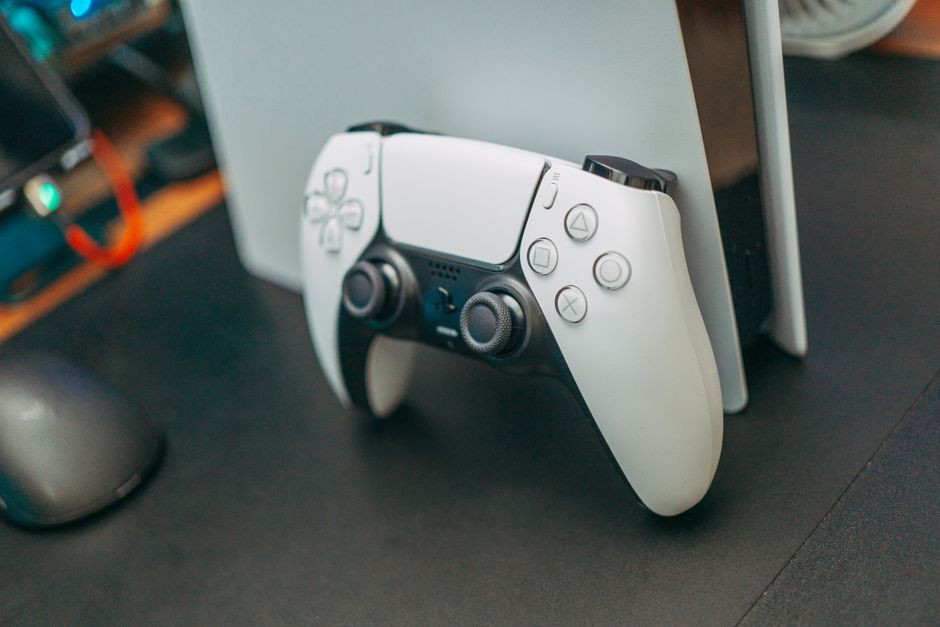
The DualSense controller brings haptic feedback and adaptive triggers that many players consider the best controller innovation of this generation. The standard PS5 continues to receive full software support, firmware updates, and day-one game releases from Sony and third-party developers.
PlayStation 5 Pro (PS5 Pro) Overview
The PlayStation 5 Pro builds on the foundation of the standard PS5 with significant hardware upgrades aimed at pushing high-fidelity gaming further. Its enhanced GPU features a more powerful compute unit configuration capable of delivering roughly **40 to 60 percent faster graphics rendering** than the standard model. The PS5 Pro is specifically engineered to handle **8K output** and advanced **PlayStation Spectral Super Resolution (PSSR)** upscaling technology, which uses AI-driven reconstruction to deliver sharp, detailed visuals without the raw computational demand of native rendering at every resolution.
Key specifications:
- **GPU:** Enhanced RDNA 3 architecture with advanced ray tracing
- **CPU:** 8-core AMD Zen 2 at 3.8 GHz (slight boost)
- **RAM:** 16 GB GDDR6 with increased bandwidth
- **Storage:** 2 TB custom SSD
- **Resolution support:** Up to 8K, enhanced 4K with PSSR upscaling
The PS5 Pro includes a larger internal SSD at 2 TB, addressing one of the most persistent criticisms of the original PS5’s limited storage capacity. Developers have access to a **”PS5 Pro Enhanced”** program, meaning many newer titles offer specific visual upgrades designed to take advantage of the Pro’s additional horsepower.
PS5 vs PS5 Pro: Performance Comparison
When comparing raw performance, the PS5 Pro pulls ahead in every meaningful category, though the gap is more pronounced in certain types of games than others.
| Feature | PS5 | PS5 Pro |
|---|---|---|
| GPU Power | 10.28 TFLOPS | ~33% faster GPU |
| Ray Tracing | Standard | Enhanced, multi-source |
| Upscaling | Standard checkerboarding | PSSR AI upscaling |
| Internal Storage | 825 GB | 2 TB |
| Max Output | 4K/120fps | 8K / Enhanced 4K |
| Variable Refresh Rate | Yes | Yes, improved |
**Graphics and Processing Power:** The PS5 Pro’s upgraded GPU handles higher polygon counts, more complex shader pipelines, and more intensive ray tracing effects simultaneously. In demanding open-world titles such as *Gran Turismo 7* or *Horizon Forbidden West*, the Pro often maintains locked framerates where the standard PS5 may show occasional dips in performance mode.
**Load Times:** Both consoles benefit from custom SSD architecture, but the PS5 Pro’s faster data pipelines and expanded memory bandwidth can shave additional seconds from loading screens. For large open-world games, this difference is noticeable but not transformative.
**4K and VR Gaming:** The PS5 Pro is the stronger choice for serious 4K television owners who want the best possible image quality. Its PSSR upscaling delivers near-native detail at 4K with significantly less performance overhead than traditional rendering, allowing games to run at higher visual settings without sacrificing smooth framerates. For virtual reality gaming, both consoles support PlayStation VR2, but the Pro can push higher resolution per-eye rendering for a crisper headset experience.
PS5 vs PS5 Pro: Exclusive Games and Features
Both the PS5 and PS5 Pro play exactly the same library of games — there is no exclusive software locked to one model over the other. Every first-party title from Sony, including franchises like *God of War*, *Spider-Man*, *The Last of Us*, *Horizon*, and *Ratchet & Clank*, runs on both consoles with full feature parity.
What changes is **how** those games look and perform. Many recent releases carry a **”PS5 Pro Enhanced”** badge, indicating developers have added specific graphical upgrades for the Pro hardware:
- Higher native resolution targets with PSSR upscaling
- Enhanced ray tracing with additional light sources
- Improved framerate caps in performance mode
- Faster rendering of volumetric effects like fog and particle systems
**DualSense Support:** Both consoles fully support the DualSense controller and its haptic feedback, adaptive triggers, and built-in microphone. No exclusive controller features are reserved for the Pro model.
Tips for Choosing Between PS5 and PS5 Pro
Choosing the right console depends on a few personal factors that every buyer should honestly evaluate before spending their money.
- **Assess your display:** If you primarily game on a 1080p or standard 4K television without high refresh rate support, the PS5 Pro’s visual advantages are harder to appreciate. A **120 Hz 4K TV with HDMI 2.1** is the ideal setup to justify the Pro’s premium price.
- **Consider your budget:** The PS5 typically costs significantly less at retail, and with a larger library of third-party accessories available at lower prices, it offers better value for cost-conscious buyers.
- **Think about game library ownership:** If you already own a PS4 and plan to use the PlayStation Store’s upgrade pricing for PS5 versions of games you already own, factor that savings into your decision.
- **Prioritize storage needs:** The standard PS5’s 825 GB drive fills up quickly with modern games that often exceed 100 GB each. The Pro’s 2 TB drive provides roughly double the breathing room without needing an immediate storage expansion.
For most casual and even dedicated gamers, the standard PS5 remains the smarter financial choice. The Pro makes the most sense for enthusiast buyers who own high-end displays and want the absolute best visual fidelity 2026 hardware can deliver.
Common Issues and Confusion
Several misconceptions frequently complicate the PS5 vs. PS5 Pro decision for buyers researching their options.
**Myth: “PS5 games won’t run on PS5 Pro.”** False. Every PS5 game runs on both consoles with full compatibility. No games are exclusive to the Pro hardware.
**Myth: “You need PS5 Pro for next-gen games.”** Not accurate. All upcoming PlayStation titles are designed to run on the standard PS5 as the baseline hardware specification. Enhanced Pro versions are optional optimizations, not requirements.
**Myth: “PS5 Pro is twice as powerful.”** The Pro’s GPU improvements are substantial but not double the performance. Most real-world gains in visual quality range from 30 to 50 percent depending on the game and display resolution.
**Storage anxiety:** Both consoles support internal SSD expansion through compatible NVMe drives. The PS5 Pro’s larger default drive reduces urgency, but either machine will eventually need a storage upgrade for players who maintain large digital game libraries.
Final Thoughts and Recommendations
The PS5 vs. PS5 Pro decision ultimately comes down to honest assessment of your own gaming setup, priorities, and budget. The standard PlayStation 5 remains one of the best value propositions in modern gaming hardware, delivering near-peak performance for the majority of players at a price point that has become increasingly accessible since launch. It handles every current game with impressive capability, and it will continue receiving full support from Sony and third-party developers well into the latter half of this decade.
The PS5 Pro is purpose-built for a specific type of buyer: someone who owns a high-quality 4K or 8K display, plays a large volume of graphically demanding titles, and wants the absolute best image quality Sony’s current platform can deliver. If you are upgrading from a 1080p television or an older PlayStation 4, the standard PS5 will feel like a generational leap regardless of which model you choose.
For families sharing a single console, the PS5 is almost always the right call. For serious solo enthusiasts with premium home theater setups, the Pro’s visual enhancements justify the premium.
Frequently Asked Questions (FAQ)
What is the main difference between PS5 and PS5 Pro?
The PS5 Pro features a significantly upgraded GPU with enhanced ray tracing capabilities, faster CPU clock speeds, the Sony PSSR AI upscaling technology, and a larger 2 TB internal SSD. These improvements allow the Pro to deliver higher visual fidelity at 4K and support 8K output, while the standard PS5 focuses on 4K gaming with traditional upscaling methods.
Which console offers better value for money in 2026?
The standard PS5 offers better value for most gamers because it plays the exact same games, supports all features, and receives all firmware updates. The PS5 Pro’s price premium is best justified only if you own a high-end 4K or 8K television and want the best possible visual quality. For standard 1080p or basic 4K setups, the standard model delivers nearly identical gaming experiences at a lower cost.
Can the PS5 and PS5 Pro play the same games?
Yes. Every PS5 game runs on both the standard PS5 and PS5 Pro with complete compatibility. Some newer titles offer “PS5 Pro Enhanced” graphical modes that take advantage of the Pro’s superior hardware, but no games are locked exclusively to either console model.
Top Product Recommendations
| Product Name | Rating | Key Feature | Est. Price | Action |
|---|---|---|---|---|
| Top-rated PlayStation 5 console bundle | ★★★★★ | Editor-recommended PlayStation 5 console bundle from this guide | $18–$42 | Check Lowest Price on Amazon |
| Best-value PlayStation 5 Pro console | ★★★★☆ | Affordable PlayStation 5 Pro console — strong everyday results | $12–$28 | Check Lowest Price on Amazon |
| Premium DualSense controller PS5 | ★★★★☆ | Higher-end DualSense controller PS5 for visible, lasting results | $45–$95 | Check Lowest Price on Amazon |
Affiliate Disclosure: This post contains affiliate links. We may earn a commission if you buy through our links, at no extra cost to you.
Leave a Reply